Claude Mythos Explained: Why This AI Breakthrough Is Changing Cybersecurity
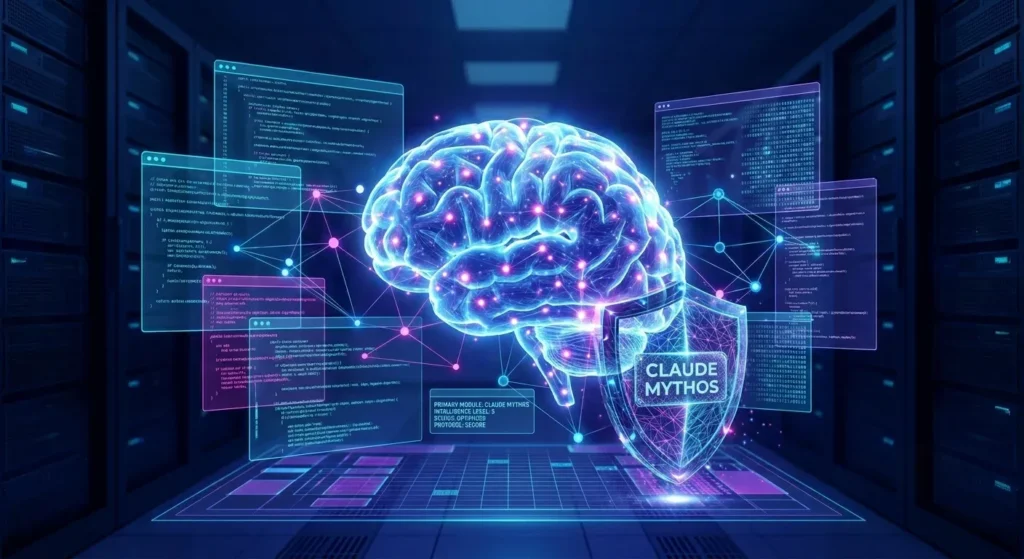
Artificial intelligence is changing cybersecurity faster than many experts expected. New AI models can analyze software, detect security flaws, and automate tasks that once required experienced researchers. One of the latest developments in this space is Claude Mythos, an advanced AI model from Anthropic that has attracted global attention.
Unlike traditional AI assistants, Claude Mythos demonstrates exceptional abilities in software engineering and vulnerability discovery. These capabilities have sparked discussions among cybersecurity professionals, government agencies, and technology companies. While many experts see it as a major step forward for software security, others believe it could also increase cyber risks if used irresponsibly.
In this guide, I will explain what Claude Mythos is, why it matters, how it affects cybersecurity, and what organizations can do to prepare for the next generation of AI-powered threats.
What Is Claude Mythos and Why Is Everyone Talking About It?
Claude Mythos is one of Anthropic’s most advanced AI models designed to handle complex software engineering tasks. It can understand large codebases, identify hidden programming errors, and detect security weaknesses much faster than previous AI systems.
What makes Claude Mythos different is its ability to reason across massive amounts of code instead of reviewing files one by one. This allows it to discover software vulnerabilities that might remain hidden during manual code reviews or traditional automated testing.
The cybersecurity community became interested because the model reportedly identified many previously unknown software flaws during internal testing. This raised an important question: if AI can discover vulnerabilities so quickly, how should organizations prepare before attackers gain access to similar technology?
Key capabilities of Claude Mythos
- Advanced code analysis
- AI-powered vulnerability discovery
- Long-context reasoning
- Autonomous software engineering support
- Faster bug detection
- Improved security research
- Large-scale code understanding
These features make Claude Mythos valuable for software developers, cybersecurity researchers, and enterprise security teams that want to improve application security.
Why Did Anthropic Restrict Access to Claude Mythos?
One of the biggest reasons Claude Mythos attracted worldwide attention was the decision to limit public access. Instead of releasing the model broadly, Anthropic introduced a controlled program that allows only selected organizations to use some of its most advanced cybersecurity capabilities.
The main concern was not that the AI creates new vulnerabilities. Instead, it can discover existing weaknesses much faster than humans. If such technology becomes widely available without proper safeguards, malicious actors could potentially identify security flaws before organizations have enough time to fix them.
Because of these risks, Anthropic partnered with trusted technology companies through Project Glasswing. The goal is to improve software security while reducing the possibility of misuse.
Why restricted access matters
Restricted access offers several important benefits.
- Security researchers can validate findings safely.
- Critical vulnerabilities can be fixed before public disclosure.
- AI safety measures can be tested.
- Organizations gain time to strengthen cyber defenses.
- Governments can evaluate national security implications.
Although this approach has created debate, many cybersecurity experts believe responsible deployment is necessary as AI capabilities continue to improve.
How Claude Mythos Changes Modern Cybersecurity
For years, cybersecurity teams relied on human experts, automated scanners, and penetration testing tools to find software vulnerabilities. Claude Mythos introduces a different approach by combining AI reasoning with advanced code analysis.
Instead of scanning only known patterns, the model can understand how software behaves. This allows it to identify complex weaknesses that may involve multiple components working together.
This shift changes both offensive and defensive cybersecurity.
Benefits for defenders
Organizations can use AI to:
- Detect hidden vulnerabilities earlier.
- Improve secure software development.
- Reduce manual code review time.
- Prioritize high-risk security issues.
- Strengthen application security testing.
Possible risks
The same technology could also help attackers if similar AI systems become widely available.
Potential concerns include:
- Faster exploit development.
- Automated vulnerability research.
- Large-scale attack planning.
- Reduced technical barriers for cybercriminals.
- Increased pressure on security teams.
For this reason, many experts describe Claude Mythos as both a powerful security tool and a reminder that cyber defense must continue evolving.
Can Claude Mythos Discover Zero-Day Vulnerabilities?
A zero-day vulnerability is a software flaw that developers do not know about. Since there is no available fix, attackers may exploit the weakness before anyone notices it.
Claude Mythos has shown remarkable ability to identify hidden software vulnerabilities during testing. Instead of relying only on known attack signatures, it analyzes the logic behind the code and searches for unexpected behavior.
This approach could significantly improve vulnerability research because AI can review far more code than a human team within the same amount of time.
However, discovering vulnerabilities is only the first step. Organizations still need to verify the findings, assess business impact, prioritize fixes, and deploy security updates quickly.
| Traditional Security Testing | AI-Assisted Security Testing |
| Manual reviews | Automated reasoning |
| Slower analysis | Faster code inspection |
| Limited scalability | Large-scale code analysis |
| Human expertise required | AI supports security teams |
| Longer testing cycles | Continuous vulnerability discovery |
Why Security Teams Need to Prepare Now
AI is making cybersecurity more competitive. As defensive tools become smarter, attackers are also exploring AI to automate phishing campaigns, malware development, and vulnerability research.
Waiting until these technologies become common may leave organizations behind. Businesses should begin improving security processes now instead of reacting after an incident occurs.
Preparation starts with understanding current security risks, updating outdated systems, and building stronger cyber resilience across the organization.
Companies that invest early in AI security, secure software development, and threat detection will likely adapt more effectively as AI continues to evolve.
Biggest Cybersecurity Risks After Claude Mythos
The arrival of AI models like Claude Mythos does not automatically make the internet less secure. Instead, it changes how quickly vulnerabilities can be discovered and analyzed. Organizations that depend on slow security processes may struggle to keep up with this new pace.
Below are the biggest cybersecurity risks businesses should understand.
AI-Powered Cyber Attacks
Cybercriminals are already using artificial intelligence to automate different stages of an attack. As AI becomes more capable, attackers can identify weaknesses faster and launch more targeted campaigns.
This means security teams must respond more quickly than ever before. Delayed patching or outdated defenses could become much more dangerous.
Faster Vulnerability Discovery
Finding software bugs once required experienced researchers and weeks of testing. Advanced AI models can now complete similar tasks in hours instead of days.
This speed benefits defenders, but it also creates pressure. Organizations need efficient vulnerability management processes to prevent growing security backlogs.
Legacy Systems Become Easier Targets
Many businesses still rely on old applications that were never designed for today’s threat landscape. Legacy software often contains hidden security weaknesses that remain unpatched for years.
AI can analyze these complex systems much faster than humans. If companies continue delaying upgrades, older systems may become attractive targets for attackers.
Supply Chain Security Risks
Modern businesses depend on cloud platforms, open-source software, and third-party vendors. A weakness in one supplier can affect thousands of organizations.
AI-powered vulnerability discovery makes supply chain security even more important. Every company should evaluate the security practices of its software providers and partners.
Identity and Access Threats
Compromised accounts remain one of the easiest ways for attackers to enter a network. AI can help criminals create convincing phishing emails and social engineering campaigns.
Strong identity protection, multi-factor authentication, and continuous monitoring can reduce this risk significantly.
How Businesses Can Protect Themselves
Although AI is changing cybersecurity, the best defense still begins with strong security fundamentals. Organizations do not need completely new strategies. Instead, they should improve the practices they already have.
Keep Software Updated
Regular patching remains one of the simplest ways to reduce cyber risk. When vulnerabilities are discovered, applying updates quickly helps prevent attackers from exploiting them.
Automated patch management can reduce delays and improve security across large environments.
Adopt a Zero Trust Security Model
Zero Trust assumes that no user or device should be trusted automatically. Every request must be verified before access is granted.
This approach limits the movement of attackers even if they manage to compromise one system.
Monitor for Unusual Activity
Traditional security tools often rely on known attack signatures. AI-powered attacks may behave differently.
Behavior-based monitoring and anomaly detection help security teams identify suspicious activity before it becomes a major incident.
Secure AI Applications
Many companies now use AI assistants, coding tools, and automation platforms. These systems should be governed just like any other business software.
Organizations should:
- Review AI permissions regularly.
- Limit access to sensitive data.
- Monitor AI-generated actions.
- Apply security policies consistently.
- Keep AI tools updated.
Train Employees Regularly
Technology alone cannot stop cyber threats.
Employees should understand how to:
- Recognize phishing emails.
- Protect login credentials.
- Report suspicious activity.
- Use AI tools responsibly.
- Follow company security policies.
Well-trained employees remain one of the strongest security defenses.
What Is Project Glasswing?
Project Glasswing is a controlled collaboration created to evaluate advanced AI cybersecurity capabilities responsibly. Instead of releasing Claude Mythos to everyone, Anthropic chose to work with selected technology companies and security organizations.
The goal is simple. Use powerful AI to improve global software security before similar capabilities become widely available.
This approach allows researchers to identify important vulnerabilities, coordinate responsible disclosure, and reduce unnecessary risk.
Goals of Project Glasswing
- Improve software security.
- Discover critical vulnerabilities.
- Support responsible AI development.
- Strengthen collaboration between technology companies.
- Reduce the risk of AI misuse.
Many experts believe this controlled deployment provides valuable time for organizations to improve their cybersecurity readiness.
Claude Mythos vs Previous Claude Models
| Feature | Earlier Claude Models | Claude Mythos |
| Code Understanding | Advanced | Significantly Improved |
| Context Size | Large | Much Larger |
| Software Analysis | Strong | Enterprise-Level |
| Vulnerability Detection | Good | More Advanced |
| Long-Term Reasoning | Limited | Enhanced |
| Complex Coding Tasks | Supported | Highly Optimized |
| AI Agent Capabilities | Basic | More Autonomous |
Claude Mythos represents an important step forward in AI-assisted software engineering. Its improved reasoning enables it to analyze complex applications more efficiently than previous generations.
Potential Benefits of Claude Mythos
Although discussions often focus on risks, Claude Mythos also offers significant advantages for businesses and developers.
Faster Security Testing
AI can review code continuously instead of waiting for scheduled security audits.
Better Software Quality
Developers can identify programming mistakes earlier in the software development lifecycle.
Improved Productivity
Routine coding and security tasks become faster, allowing engineers to focus on more complex work.
Stronger Vulnerability Research
Researchers can analyze larger software projects without increasing team size.
Better Enterprise Security
Organizations gain faster visibility into critical vulnerabilities before attackers discover them.
Challenges and Ethical Concerns
Every powerful technology introduces new responsibilities. Claude Mythos is no exception.
Responsible AI Use
Organizations should establish clear policies that define how AI systems are used, monitored, and reviewed.
AI Misuse
Cybercriminals may eventually gain access to similar technologies. Businesses should prepare for AI-assisted attacks rather than assuming current restrictions will last forever.
Data Privacy
AI systems often process large amounts of information. Protecting customer data and confidential business information remains essential.
AI Governance
Companies should maintain clear ownership for AI systems, monitor their activities, and regularly review security controls.
Regulatory Compliance
As governments introduce new AI regulations, organizations must ensure that AI deployment aligns with legal and industry requirements.
Future of AI-Powered Cybersecurity
Artificial intelligence will continue transforming cybersecurity over the next few years. Future AI models are expected to improve software development, automate threat detection, and strengthen vulnerability management.
At the same time, cybercriminals will also continue adopting AI. This means organizations should focus on resilience instead of reacting to individual threats.
The companies that succeed will combine skilled security professionals with intelligent automation. AI should support human expertise rather than replace it.
Security teams that invest in modern security architecture, continuous monitoring, and AI governance today will be better prepared for tomorrow’s challenges.
Conclusion
Claude Mythos represents more than another AI model. It shows how quickly artificial intelligence is changing software engineering and cybersecurity.
The technology has enormous potential to improve software quality, discover hidden vulnerabilities, and strengthen cyber defense. However, it also reminds organizations that security cannot rely only on traditional methods.
Businesses should improve patch management, modernize identity security, strengthen Zero Trust strategies, and adopt responsible AI governance. These steps will help organizations benefit from AI while reducing unnecessary risk.
The future of cybersecurity will not depend only on smarter AI. It will depend on how wisely people choose to use it.
Frequently Asked Questions
Is Claude Mythos available to everyone?
No. Access has been limited to selected organizations through a controlled program to reduce potential security risks.
Why is Claude Mythos important?
It demonstrates advanced AI capabilities in software engineering, code analysis, and vulnerability discovery that could reshape cybersecurity.
Can Claude Mythos perform hacking?
The model was not created as a hacking tool. However, advanced vulnerability discovery capabilities require careful safeguards to prevent misuse.
What industries could benefit from Claude Mythos?
Software development, cybersecurity, cloud computing, financial services, healthcare, manufacturing, and enterprise technology can all benefit from AI-assisted security improvements.
Should businesses worry about AI-powered cyber threats?
Yes. Organizations should strengthen cybersecurity fundamentals, improve vulnerability management, and prepare for increasingly advanced AI-assisted attacks.