Quick Answer
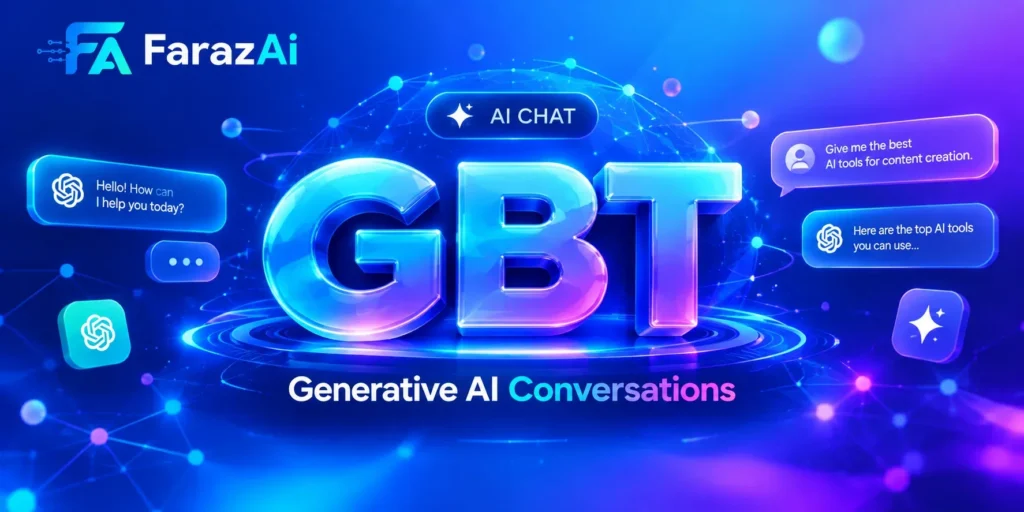
GBT is an informal, often mistyped term that most people encounter when they mean GPT (Generative Pre-trained Transformer), the architecture behind tools like ChatGPT. In a small number of AI directories and glossary sites, GBT has also been loosely used as shorthand for “Generative AI-Based Technologies,” a non-standard label covering AI systems that generate text, images, code, or audio. There is no single official, industry-recognized definition of GBT. If you searched this term expecting information about generative AI tools, this guide explains exactly where the confusion comes from and what you actually need to know.
If you clicked through hoping to understand GPT specifically, you’re in the right place. If you searched GBT because you saw it as a job title (Global Business Traveler or Global Business Team), that’s a completely different and unrelated meaning, and we’ll touch on it briefly near the end.
Why This Term Is So Confusing
Search for “GBT” today and you’ll land on three very different kinds of pages: a recruiting glossary entry, a directory listing for a custom chatbot, and a general-purpose AI chat product page. None of them agree on what GBT actually means, and that’s the core problem worth solving here.
Here’s what’s really happening. GBT shows up online in three separate contexts that have nothing to do with each other:
- A typo or autocomplete slip for GPT — by far the most common reason people land on this term when searching in an AI context
- An informal glossary label (“Generative AI-Based Technologies”) used by a small number of sites to describe generative AI tools broadly, without any standardized definition or industry adoption
- An unrelated business acronym (Global Business Travel, Global Business Team) used in corporate and HR contexts, completely disconnected from artificial intelligence
Understanding which bucket your search falls into will save you time and get you to the right answer faster.
GBT vs GPT: What’s the Actual Difference?
This is the question most people are really asking, whether they realize it or not.
GPT stands for Generative Pre-trained Transformer. It’s a specific, well-documented type of neural network architecture developed by OpenAI, first introduced in 2018 and refined through multiple generations since. GPT models are trained on massive datasets of text, then fine-tuned to generate coherent, context-aware responses. ChatGPT is the consumer product built on top of GPT models.
GBT, by contrast, has no equivalent technical foundation. It is not an architecture, not a research paper, and not a term used by any major AI lab like OpenAI, Google DeepMind, or Anthropic. Where it appears in AI contexts, it’s typically either:
- A misspelling that stuck in search behavior (letter transposition is extremely common, and search engines often surface loosely related results rather than correcting it outright)
- A branding choice by smaller, independent developers building custom chatbots (see the “Gbt Chat AI” example below)
- An informal catch-all phrase used by low-authority content sites to describe generative AI tools in general
Comparison Table: GBT vs GPT vs LLM vs GAN
| Term | Full Meaning | Is It Standardized? | Developed By | Common Use |
| GPT | Generative Pre-trained Transformer | Yes, industry standard | OpenAI | Powers ChatGPT and similar tools |
| GBT | No fixed meaning; often a typo for GPT | No | N/A | Informal, inconsistent usage |
| LLM | Large Language Model | Yes, industry standard | Multiple (OpenAI, Google, Anthropic, Meta) | Umbrella term for models like GPT, Gemini, Claude |
| GAN | Generative Adversarial Network | Yes, industry standard | Ian Goodfellow (2014) | Image generation, deepfakes, synthetic data |
The takeaway: if you’re researching AI terminology seriously, GPT and LLM are the terms with real technical weight. GBT is not one of them.
Real-World Examples of “GBT” in the Wild
To be genuinely useful here, it helps to look at where this term actually shows up rather than just defining it in the abstract.
Custom GPT bots branded with “GBT.” Some independent developers have created custom chatbots on OpenAI’s GPT Store and named them using “GBT” as a stylistic variant, likely to stand out or because of a naming preference. These are functionally still GPT-based tools; the name itself doesn’t indicate different underlying technology. They tend to be simple conversational bots without unique capabilities beyond what the base GPT model already offers.
General-purpose AI chat pages. Some AI chat platforms host pages targeting variations of the term “GPT,” including near-misspellings, to capture search traffic from users who make typos. These pages typically offer a chat interface similar to ChatGPT, sometimes built on entirely different underlying models, and explicitly disclaim any affiliation with OpenAI.
Recruiting and HR glossary entries. Some career and job-listing platforms maintain auto-generated glossary pages for acronyms, including one that defines GBT as “Generative AI-Based Technologies.” These definitions tend to be broad, unsourced, and inconsistent with how the term is used anywhere else, which contributes to the overall confusion rather than resolving it.
How Generative AI Actually Works (The Part People Are Usually Looking For)
Since most searches for GBT are really searches about generative AI in general, it’s worth explaining the underlying technology properly.
Generative AI models, including GPT-based ones, work through a process broadly called deep learning. Here’s the simplified version:
- Training data ingestion — the model is exposed to enormous volumes of text, images, or code
- Pattern learning — using a neural network architecture (transformers, in GPT’s case), the model learns statistical relationships between words, phrases, and concepts
- Fine-tuning — the base model is further trained on curated, human-reviewed data to improve helpfulness, accuracy, and safety
- Inference — when you type a prompt, the model predicts the most likely next words, one at a time, based on everything it learned during training
This is true whether the tool in front of you is called ChatGPT, a custom “GBT” bot, or any other branded chat product. The underlying mechanism is almost always some variation of transformer-based generative modeling.
Practical Use Cases for Generative AI Tools
Regardless of naming confusion, the underlying technology behind tools like GPT is genuinely useful across a wide range of tasks:
- Content creation — drafting articles, marketing copy, product descriptions, and social media posts
- Customer support — powering chatbots that handle common inquiries without human intervention
- Software development — code completion and debugging assistance (as seen in tools like GitHub Copilot)
- Research and summarization — condensing long documents or papers into digestible summaries
- Creative work — generating story ideas, dialogue, and even music or image concepts when paired with tools like DALL-E
Expert Analysis: Why Terminology Drift Happens in Fast-Moving Tech
Acronym confusion like this is not unusual in fast-evolving technology fields. When a term becomes culturally dominant quickly, as GPT has since 2022, search behavior naturally produces variants, typos, and copycat branding. Smaller platforms sometimes capitalize on this by creating content or products around the misspelled or adjacent term to capture overflow search traffic. This is a well-documented pattern in SEO, sometimes called “typo-targeting,” and it explains why thin, low-authority pages tend to dominate search results for terms like GBT rather than any single authoritative source.
The practical lesson: when a term feels inconsistent across multiple sources, that’s usually a signal the term itself isn’t standardized, rather than a sign you’re missing something.
Pros and Cons of Generative AI Tools (Including GBT-Branded Ones)
| Pros | Cons |
| Fast content and code generation | Can produce inaccurate or fabricated information |
| Available 24/7 for support and drafting tasks | Quality varies significantly between branded/custom tools |
| Increasingly accessible and affordable | Naming confusion can lead users to lower-quality alternatives |
| Useful across writing, coding, and research | Raises questions around originality and attribution |
Common Mistakes People Make Searching for “GBT”
- Assuming GBT is an official OpenAI product or term — it isn’t; OpenAI’s terminology is GPT
- Trusting unsourced glossary definitions at face value — several sites define GBT inconsistently, which is itself a red flag
- Confusing the AI meaning with the unrelated business acronym — Global Business Travel and Global Business Team have zero connection to artificial intelligence
- Assuming custom bots branded “GBT” use different technology — most are still built on standard GPT infrastructure
Best Practices When Researching AI Terminology
- Cross-check any AI acronym against major AI labs’ own documentation (OpenAI, Google DeepMind, Anthropic) before trusting third-party glossaries
- Treat single-source, unsourced definitions with caution, especially on non-technical sites like recruiting platforms
- When in doubt, search the closest standardized term (GPT, LLM) rather than a variant spelling
- Bookmark authoritative sources rather than relying on directory or glossary sites that may not update accurately over time
The Non-AI Meaning: GBT as a Business Acronym
Briefly, since it does show up in search results: GBT is also used in corporate and travel-industry contexts to mean Global Business Travel or, in some HR listings, Global Business Team. This usage is entirely unrelated to artificial intelligence and typically appears in job postings, corporate travel management platforms, and internal business terminology. If this is what you were actually looking for, it’s worth noting this meaning has no connection to the generative AI discussion above.
Key Takeaways
- GBT has no standardized, official meaning in the AI industry
- Most AI-context searches for “GBT” are really about GPT (Generative Pre-trained Transformer)
- A small number of low-authority sites use “GBT” loosely to mean “Generative AI-Based Technologies,” but this isn’t an industry-recognized term
- Custom chatbots branded with “GBT” are typically still built on standard GPT technology
- GBT also has a completely unrelated meaning in business/HR contexts (Global Business Travel/Team)
- For accurate, up-to-date information on generative AI, GPT and LLM are the terms with real technical grounding
Conclusion
The confusion around “GBT” isn’t a knowledge gap on your part, it’s a reflection of a term that never had a stable, agreed-upon definition to begin with. If you’re researching generative AI seriously, anchor your understanding to GPT and LLM, the terms with actual technical documentation and industry consensus behind them. If you landed here through a custom chatbot or directory listing branded “GBT,” know that you’re almost certainly interacting with standard GPT-based technology under a different name. And if your search was actually about business travel or team acronyms, that’s a separate conversation entirely, unconnected to anything in artificial intelligence.
Frequently Asked Questions
Is GBT the same as GPT?
No, not officially. GBT is not a recognized technical term or architecture. Most uses of “GBT” in an AI context are either typos for GPT or informal branding by smaller tools, not a distinct technology.
What does GBT stand for?
There’s no single accepted answer. Some sites informally use it to mean “Generative AI-Based Technologies,” but this isn’t a standardized industry term, and it’s not used by major AI companies like OpenAI, Google, or Anthropic.
Who created GBT?
No one, in the sense of a formal technology. GPT, which GBT is often confused with, was developed by OpenAI. If you’re seeing “GBT” branding on a specific chatbot or app, that’s typically an independent developer’s naming choice, not evidence of separate underlying technology.
Is GBT Chat AI legitimate?
Custom chatbots using “GBT” branding are generally functional but are usually simple wrappers built on existing GPT infrastructure rather than independently developed AI systems. Check the specific product’s documentation for details on what model it actually runs on.
Why do search results for GBT seem inconsistent?
Because the term isn’t standardized. Different sites (recruiting glossaries, AI directories, chatbot platforms) have each attached their own loose interpretation to it, which is why you’ll see conflicting definitions across search results.